
That’s Not Helping Me
What I learned when I took something small away from someone who didn’t have much left to hold onto

I thought I was helping
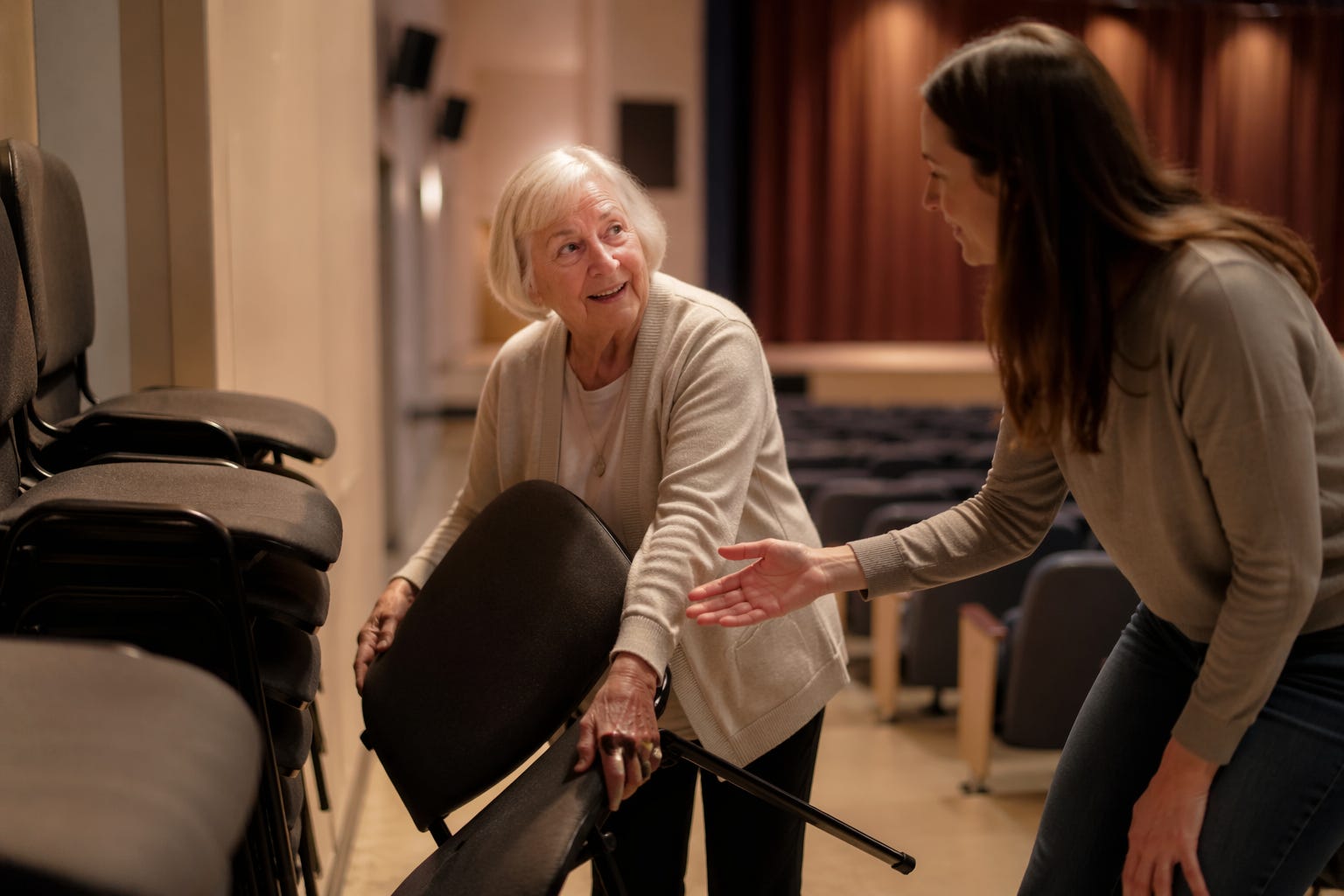
We were in an auditorium, chairs stacked along the side wall.
People were getting settled before a lecture, walking over, pulling a chair out, finding a place to sit. It was one of those simple in-between moments where everyone is just doing their own thing.
She was a few steps ahead of me.
An older woman I had gotten to know a bit over the past couple of days. She had dementia. Conversations were sometimes hard for her. Finding words, tracking what was happening around her, moving through unfamiliar spaces, all of it took a little more effort. And still, she showed up. She kept trying. There was something steady about her.
So when I saw her reach for a chair, I didn’t really think about it.
I just stepped in and grabbed it from her. Carried it over. Set it down where she was about to sit.
It happened fast. Almost automatic.
And I felt that quiet, familiar sense of doing something good.
Then she said something simple
She looked at me and smiled.
“What are you doing?”
“I’m helping you,” I said.
She paused for a second, still smiling.
“That’s not helping me.”
I remember feeling a small drop in my chest. Not dramatic, just enough to notice. Like something didn’t quite line up.
“What do you mean?” I asked.
She said, very calmly, “There are very few things I can still do on my own. And I really want to do the things I can.”
That moment stayed with me
It wasn’t said with frustration. There was no edge to it.
Just clarity.
And I could feel, almost immediately, that I had missed something.
I had stepped in without asking. I had assumed. I had decided what help looked like and moved before checking if it actually helped her.
And in doing that, I took something small but real away from her. The chance to move her own chair. To feel capable. To have a moment that was hers.
I hadn’t meant to do that. But intention didn’t change what happened.
Something I didn’t see at first
When I looked at it more honestly, I could see that part of what was happening in me had nothing to do with her.
There was a pull to be helpful. A kind of reflex. It feels good to step in, to make something easier for someone else. There’s a quick sense of usefulness in it.
But I didn’t slow down long enough to notice what she might have wanted instead.
I think we do this more than we realize. We move quickly toward helping because it feels right, and we assume it will land the way we intend.
Sometimes it does. Sometimes it doesn’t.
We crossed paths again
A couple of days later, we were back in the same room.
Same chairs along the wall. Same slow movement of people getting settled.
I saw her again.
She walked over and reached for a chair, and I felt that same instinct start to rise. That urge to step in.
This time I paused.
Just a small pause, but it was enough.
I grabbed my own chair and looked over at her. I smiled and said something like, “I hope you enjoy doing that yourself.”
She smiled back.
And she did. She picked up the chair, carried it over, set it down. Took her time with it.
There was something quietly right about that moment.
Nothing big happened. I didn’t do anything impressive. I just didn’t interrupt what she was already doing.
By not stepping in, I was giving her what she actually needed.
What I’ve been thinking about since
It’s easy to think of help in practical terms. Making something easier. Faster. More efficient.
But there are other things happening at the same time.
People want to feel like themselves. They want to feel capable. They want to have some say in how they move through their day, even in small ways.
And those things can get overlooked when we move too quickly.
I don’t think the answer is to stop helping. That’s not really the point. It’s more about noticing the moment before we act. Giving ourselves just enough space to include the other person in what’s happening.
Sometimes that looks like asking. Sometimes it’s just paying closer attention.
A small thing I’m trying
I’ve been experimenting with slowing down right at that edge where I feel the urge to step in.
Just noticing it. Not shutting it down, just giving it a second.
And sometimes asking something simple, like, “Do you want help with that?”
Not every moment needs a question. But that little shift changes the feel of the interaction.
It keeps the other person included.
I’m still figuring this out
I still move faster than I would like sometimes. I still assume.
But that moment with her stayed with me in a way I didn’t expect.
Because it was such a small thing. A chair. A simple action.
And still, it mattered more than I expected.
It reminded me that even in ordinary moments, there’s something important being held.
And sometimes the most respectful thing I can do is let someone keep the moment for themselves.
Later this week, I’m going to share a companion piece where I walk through some of the places this shows up in everyday life.
I’ll walk through some of the everyday places this shows up, and what it looks like to stay connected while still supporting someone. Small shifts, real examples, things you can actually try in the moment.
It’ll be for paid subscribers, if you want to explore this more together.
How about “May I help you with that?” May, not can. We know you can. And, you wait, after asking, for the answer, while looking the person in the eye.
I find the comment, “I hope you enjoyed doing that yourself,” to be a totally unnecessary and rather patronizing thing to say, bringing her back to the previous situation, where you did something for her that she didn’t want you to do. Let it go! It’s not about you!